
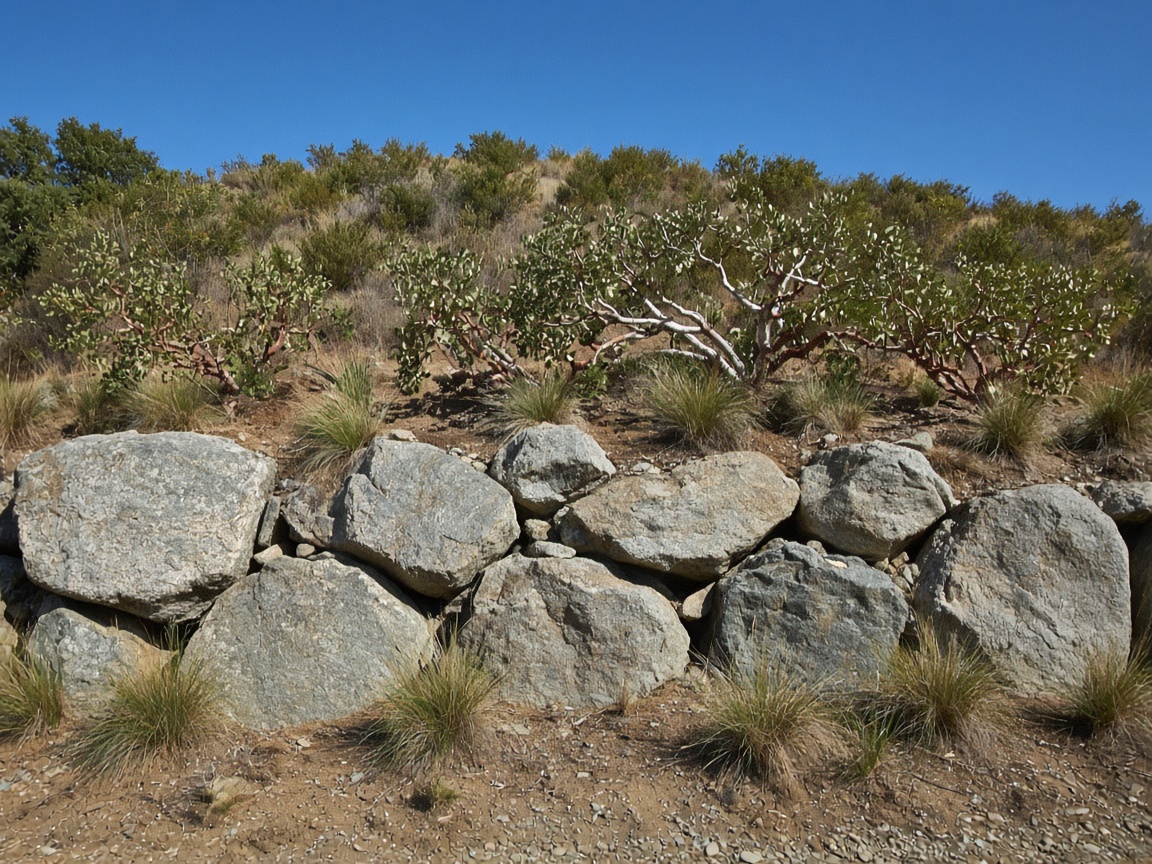
Boulder Retaining Walls San Jose
Massive natural boulders and rip-rap walls engineered for steep slopes, creek banks, and heavy soil movement. Built to hold where nothing else will.
What We Handle
- Natural granite, serpentinite, and river boulders
- Placed with an excavator — no mortar, no forms
- Extremely effective for steep slope stabilization
- Natural appearance blends with California hillside landscapes
- Low maintenance once placed correctly
When a slope is steep, the soil is heavy and unstable, and you need sheer mass to hold it — boulders are the answer. Natural boulder retaining walls are large natural stone boulders, ranging from a few hundred pounds to multiple tons each, placed strategically along a slope using an excavator to hold the grade and prevent erosion. They are visually dramatic, structurally powerful, and require virtually no maintenance once in place.
How Boulder Walls Are Installed
Boulder placement is a skill that looks simple but is not. Each boulder needs to be set to its stable angle, tilted slightly back into the slope to resist forward movement, and keyed into the ground so it cannot slide forward at its base. The largest boulders go at the bottom, with progressively smaller ones stacked above. On steep slopes, the bottom row of boulders is typically partially buried — set into a trench excavated for the purpose — to provide a solid toe.
Drainage considerations for boulder walls are different from solid masonry walls. The natural gaps between boulders allow water to pass through, naturally relieving hydrostatic pressure. However, soil can erode through those same gaps over time, which is why a coarse gravel backfill layer behind the boulders is recommended — it allows water to drain freely while preventing soil migration.
Boulder Size and Site Access in San Jose
Boulder size selection depends on wall height and slope severity. For a 4-foot wall on a moderate slope, boulders in the 1 to 3 ton range are typical. For a 10-foot wall on a steep slope retaining significant soil mass, individual boulders may be 5 to 10 tons, and placement requires a large excavator with significant lifting capacity.
Site access for equipment is an important consideration in San Jose's hillside neighborhoods — Almaden Valley, Evergreen, the Foothills above Blossom Valley. Tight side yards, overhead utility lines, and steep access paths all affect what equipment can get to the work site. We assess access during the initial site visit and factor this into the project plan.
Boulder Wall Aesthetics in the San Jose Landscape
From a design standpoint, boulder walls have an authenticity that manufactured materials cannot replicate. They look like they belong in the California landscape, because they are made from the same materials the landscape itself is made from. Granite boulders have a timeless quality; serpentinite boulders with their distinctive greenish-grey coloring are specifically Californian.
Plant material grows naturally in the gaps and around the base of boulder walls, creating a planted retaining wall effect over time without active gardening effort. Drought-tolerant California native species — manzanita, California lilac, native grasses, and succulents — are well-suited to the dry, rocky conditions around boulder walls.
Common Questions
How big do boulders need to be for a retaining wall?
For a 2 to 3 foot garden wall, boulders in the 200 to 500 pound range are common. For walls holding back significant slopes at 4 to 6 feet, plan on boulders weighing 1 to 3 tons each. The general rule is that the boulder mass should be at least 2 times the lateral soil force at the point of placement.
Do boulder walls need drainage?
Less so than solid masonry walls, because gaps between boulders allow natural drainage. But gravel backfill behind the boulders is still recommended to prevent soil piping through the gaps, which can undermine the wall over time.
Can boulders be used for tall retaining walls?
Yes. Multi-layer boulder walls with large key stones at the base can hold slopes over 10 feet high. At these heights, an engineer should review the placement plan. The key factor is boulder-to-boulder contact area and the stability of the base course.
Ready to move forward with your boulder walls project? San Jose Retaining Wall Co handles retaining wall work across San Jose and Santa Clara County. Call us or fill out the quote form and we'll be in touch quickly.
Get a Free Quote
Other Wall Services