
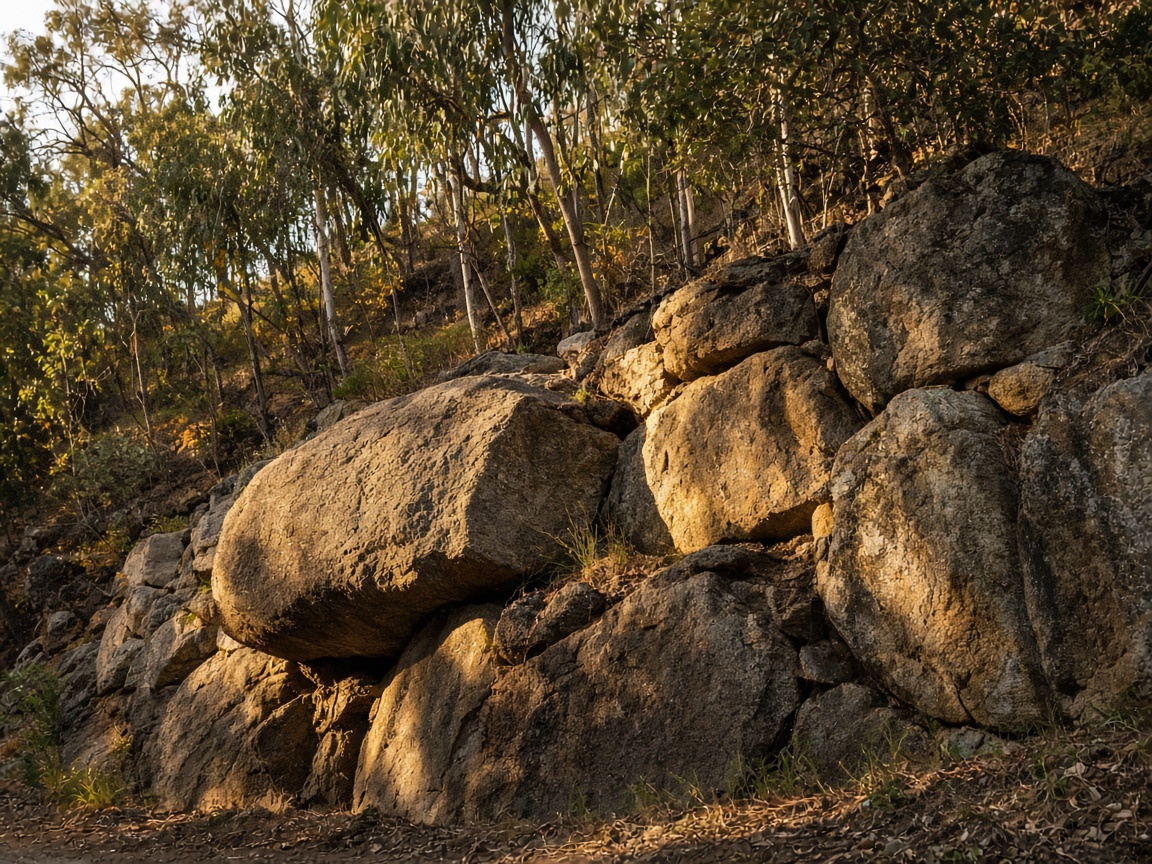
Hillside Retaining Walls San Jose
San Jose's hilly terrain demands walls engineered for steep grades and heavy lateral soil loads. We specialize in hillside and canyon-edge retaining wall construction.
What We Handle
- Engineered for steep grades and high lateral soil loads
- Experience with Almaden Valley, Evergreen, Silver Creek hillsides
- Seismic loading considerations in all designs
- Site-specific drainage engineering for hillside conditions
- Large equipment access planning for steep site access
San Jose's varied terrain is unlike any other major California city. The flat valley floor gives way quickly to the steep foothills of the Diablo Range to the east and the Santa Cruz Mountains to the west, and much of San Jose's residential development — from Almaden Valley to Evergreen to the Silver Creek hills — sits on or near these slopes. Hillside retaining walls in these neighborhoods demand a level of engineering sophistication that flat-lot residential walls simply do not require.
What Makes Hillside Walls Different
On a flat or gently sloping lot, a retaining wall is primarily resisting the weight of the soil directly behind it. On a steep hillside, the wall is also dealing with the potential energy of a large mass of soil above it — the tendency of the hillside itself to move downslope. This is called slope stability, and it is a separate engineering analysis from the retaining wall design itself.
A retaining wall can be perfectly designed for the soil load immediately behind it, and still fail if the hillside above it moves as a landslide — carrying the wall downslope along with everything else. This is why hillside retaining wall projects in San Jose often require a geotechnical investigation (soils report) in addition to a structural engineer's wall design. The geotechnical engineer evaluates global slope stability and specifies how the wall can be constructed without making the slope less stable.
Seismic Considerations for Hillside Walls in San Jose
San Jose sits within the shaking radius of multiple active fault systems. The Hayward Fault — capable of a magnitude 7.0 earthquake — is approximately 10 miles northeast of downtown San Jose. The Calaveras Fault runs through the eastern hills. The San Andreas Fault is 15 to 20 miles to the west. In a significant seismic event, hillside soils can fail and slope movement can occur even on slopes that are otherwise stable under static conditions.
Retaining walls on hillside properties in San Jose need to be designed for seismic loading in accordance with the California Building Code's seismic provisions. For engineered concrete and block walls, the engineer will specify additional reinforcement and footing dimensions to account for the additional lateral forces that seismic acceleration produces. For boulder and stone walls, the mass of the materials provides inherent seismic resistance, but placement and keying details still matter.
Common Hillside Neighborhoods We Work In
The hillside terrain of San Jose's Almaden Valley presents some of the most complex retaining wall projects in the city — steep lots with significant grade changes, expansive clay soils, and residential development that pushes right up against natural slopes. Evergreen hills in east San Jose similarly have challenging terrain with tight access and steep slopes. Silver Creek, Santa Teresa, Blossom Valley, and the Foothills neighborhoods all have regular retaining wall work ranging from minor erosion control to major hillside terracing.
Working in these neighborhoods requires not just technical expertise but familiarity with local access challenges — narrow streets, tight side yards, steep driveway grades, and overhead utility lines that limit crane and excavator access. Planning equipment routing as part of the project design, rather than discovering access problems on the first day of work, is part of how we approach hillside projects.
Common Questions
Do hillside retaining walls in San Jose require a geotechnical report?
For walls over a certain height and on slopes over a certain angle, yes. The City of San Jose's Building Division typically requires a soils report for retaining walls on hillside properties that exceed 4 feet in height or are in areas with significant slope. The geotechnical engineer evaluates global slope stability, soil bearing capacity, and seismic hazard.
How do you get equipment to a hillside property with limited access?
Access planning is part of every hillside project proposal. For properties with limited equipment access, we may use smaller excavators, hand tools for portions of the work, or temporary access improvements. We assess access during the initial site visit and give you a realistic picture of how the work will proceed before any contract is signed.
What type of retaining wall is best for a steep hillside in San Jose?
It depends on the specific slope, soil conditions, and aesthetic goals. For very steep slopes with limited access, boulder walls are often the most practical choice — they work with the terrain rather than against it. For terracing projects, segmental block systems with geogrid are typically the most cost-effective. Poured concrete walls are used when very tall single walls are needed and aesthetics allow for the utilitarian appearance.
Ready to move forward with your hillside walls project? San Jose Retaining Wall Co handles retaining wall work across San Jose and Santa Clara County. Call us or fill out the quote form and we'll be in touch quickly.
Get a Free Quote
Other Wall Services